ThinGap, LLC is well known for small motors with excellent performance characteristics, eliminating the use of iron and its resultant “lossiness” and depending instead on copper foil, rather than wire windings for its internally clean structure.
The design leads to a lack of “cogging,” that notched feeling found when turning over some motors by hand. Each individual magnet causes the rotor to stop, or “cog,” sometimes making low-speed operation a bit hesitant and smooth transitions difficult. That, the unique ring design and an aluminum housing help carry heat away and allow for an internal controller.
ThinGap have focused on smaller unmanned aerial vehicle applications for many years, but have moved into larger automotive and aircraft products, with one model in particular capturing our attention. The non-production 14090 ring motor is 14 inches in diameter, weighs 25.6 pounds and can deliver 122 kilowatts (163 horsepower) – about 6.4 horsepower per pound and close to the Halbach array motors of Geoff Long and comparable with the ISIS motors developed at Oxford University.
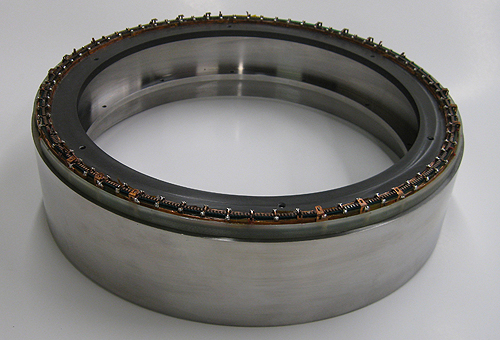
ThinGap's 14-inch ring motor, only 3.5 inches thick
“’ThinGap’s 14-inch electric ring motor allows a ducted fan to develop as much thrust as with a gas engine, which is a game-changing milestone,’ said Rean Pretorius, President, ThinGap, LLC. ‘At 6.4 HP per pound, its power to weight ratio has not been achieved by any electric motor currently in production and exceeds the aerospace engineering threshold of 5 HP per pound. The advantage is much quieter operation for stealth, and less weight, which can be critical for UAV surveillance and close support tactical applications.’”
Highlighting the motor’s potential use as a ducted fan motor, other motors in ThinGap’s lineup claim up to 92-percent efficiency, promising good range from available batteries.